




-
Western Australia's north west, spanning the Pilbara and extending toward the Kimberley, hosts one of the country's largest mining and resource industries. As mining interests push further north into the Kimberley region, Traditional Owners and local campaigners continue to resist expansion, arguing that the region's cultural heritage sites, rock art, and fragile ecosystems need protection from further industrial development.
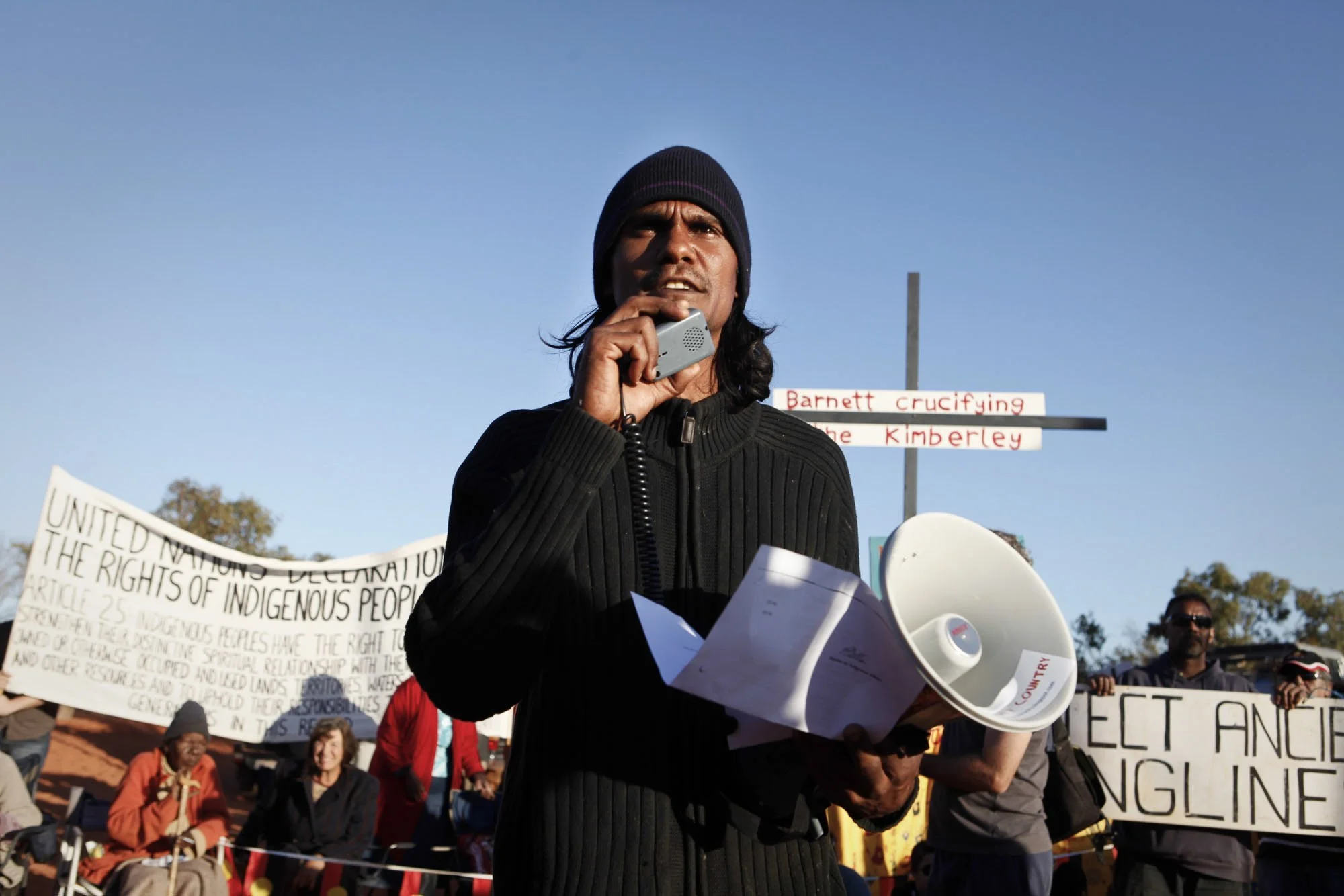
In Broome Western Australia, the 5th July 2011 is now known as Black Tuesday. On this day about 100 riot police stormed a month-long blockade that had been defending the Kimberley coast against industrialization by mining corporations such as Woodside. Protestors opposed a 2500 hectare LNG processing hub and associated deep-sea port at James Price Point (Walmadany), an area of great environmental and cultural significance, providing a habitat for endangered species such as the bilby, as well as the site of many Aboriginal burials.
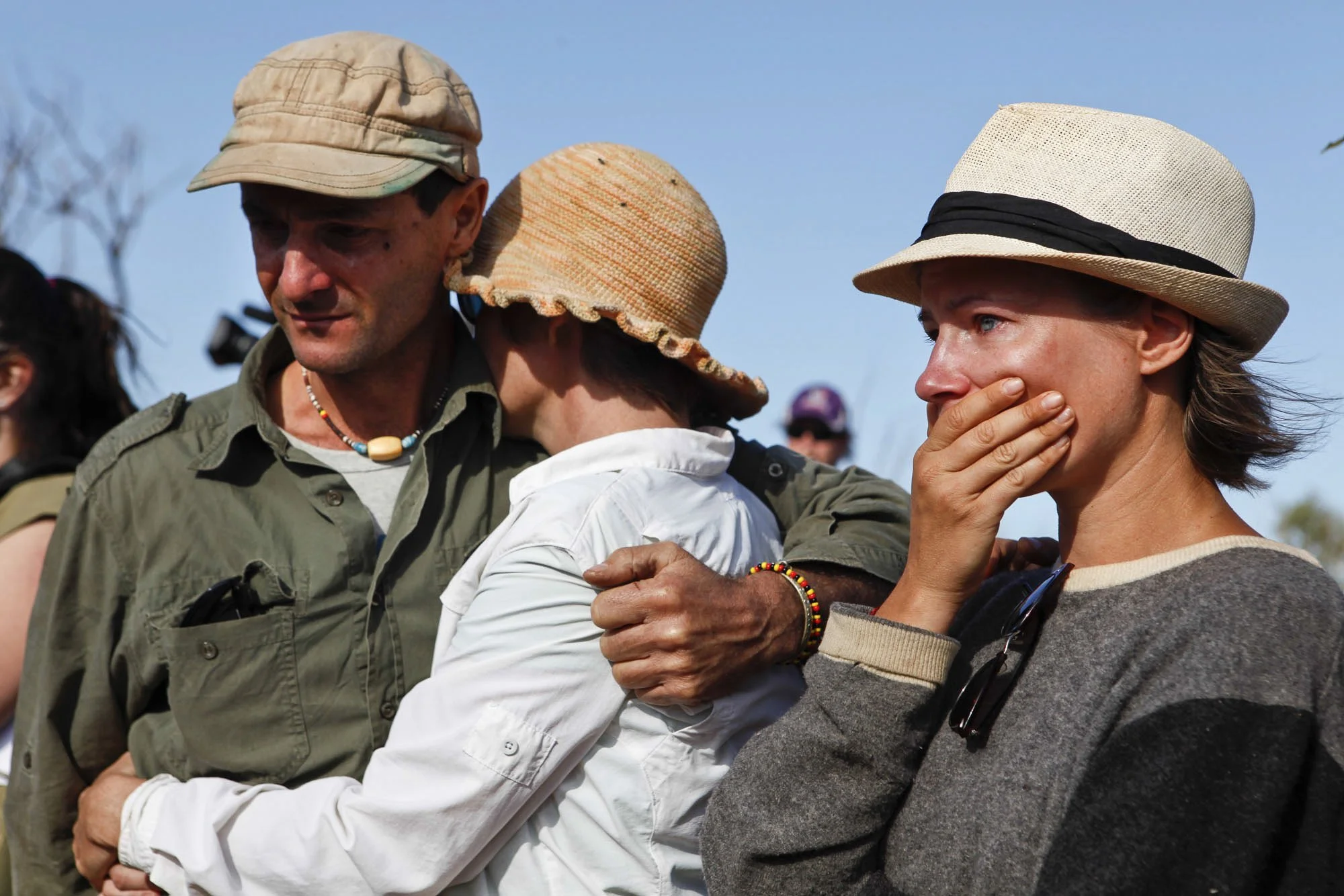
At dawn that day, I stood in the red dirt just north of Broome among 250 protesters, most of them locals. Anticipation mingled with the sound of the didgeridoo, and the group sang songs in the face of riot police flown up from Perth. The protestors held their ground all morning, but when the mainstream media returned to town to file their stories, the police became heavy-handed and the blockade was eventually dismantled as the heavy machinery charged through.
Despite what felt like defeat for those opposing the $35 billion gas hub, Black Tuesday marked a pivotal moment when this extraordinary campaign drew national and international attention. Crucially, the images and footage from that day helped the "No Gas" campaign gain momentum. The battle continued until 2013, when Woodside and its partners finally withdrew from the project.
The fight for the Kimberley, though, has not ended with that withdrawal. New proposals for gas, mining, and infrastructure development continue to surface across the region, and Traditional Owners and environmental groups remain on alert, ready to mobilise again.
Black Tuesday is commemorated each year as a significant date in local memory and campaign history. It stands as a reminder that community resistance can shift the outcome of even the largest industrial projects.